


Cardio for women is more than logging kilometers on a treadmill; it is a strategic way to strengthen your heart, boost energy, and shape confidence through every season of life. Whether you are preparing for pregnancy, returning after birth, or navigating menopause, the right plan can feel like a compass, not a chore. Evidence suggests consistent aerobic training improves heart health, lifts mood, supports healthy blood sugar, and enhances sleep quality. Yet your needs are unique, which is why thoughtful progressions, pelvic-floor awareness, and recovery matter just as much as intensity.
In Cairns and across Australia, many women share a similar story: you want to move, but it is hard to find expert guidance that accounts for hormones, life stage, and everyday realities. That is precisely where Health Moves Cairns steps in. Health Moves Exercise Physiology blends functional movement with practical guidance and, where appropriate, coordination with your GP (general practitioner) to create sustainable routines. As you read, you will find science-backed tips, practical workouts, and step-by-step examples to help you build a plan that feels safe, effective, and rewarding.
Why Cardio Matters for Women’s Health at Every Stage
Cardiovascular exercise supports a cascade of benefits—from improving VO2 max (maximal oxygen uptake) to reducing long-term disease risk. Global guidelines recommend 150 to 300 minutes of moderate-intensity or 75 to 150 minutes of vigorous-intensity activity weekly, plus two strength sessions. For women, cardio can also support bone health, brain function, and body composition, especially when paired with resistance training. During pregnancy and postpartum, gentle, regular movement can ease back discomfort, enhance circulation, and support mood stability. Through perimenopause and menopause, it can counter declines in aerobic capacity and assist with weight management.
Beyond physiology, cardio is a powerful mindset tool. Small wins—like one more minute of brisk walking—accumulate into confidence, and confidence sparks consistency. If you have felt overwhelmed by conflicting advice, consider this framework: choose joint-friendly modes, match intensity to your goals, and monitor recovery as closely as you track progress. Health Moves Cairns uses evidence-based screening that considers pelvic-floor and musculoskeletal health to tailor plans that respect your starting point. The result is a routine that feels like it fits your life rather than demands your life revolve around it.
Cardio for Women: How Much, How Hard, and How Often
Your weekly mix depends on your goals, life stage, and schedule. A common structure is two to four moderate sessions and one optional higher-intensity day, with at least one full rest day. Intensity can be guided by RPE (rating of perceived exertion), HR (heart rate), or the talk test. For many, RPE (rating of perceived exertion) 4 to 6 (you can speak in short sentences) is a sweet spot for building endurance without overloading recovery. If you enjoy intervals, one carefully planned HIIT (high-intensity interval training) session can improve fitness efficiently, provided your pelvic floor, joints, and sleep are in a good place.
Watch This Helpful Video
To help you better understand cardio for women, we’ve included this informative video from blogilates. It provides valuable insights and visual demonstrations that complement the written content.
How do you judge the right dose? Try this: if you feel energized within 24 hours, your volume is likely appropriate; if you feel flat, sore, or irritable, reduce intensity or duration. LISS (low-intensity steady state) work—think brisk walking, cycling, or swimming—builds an aerobic base that improves fat oxidation and supports recovery between harder efforts. Short, sharp intervals can create EPOC (excess post-exercise oxygen consumption) for additional energy burn after training, but quality of movement and breathing control come first. At Health Moves Cairns, your plan is calibrated with simple metrics and check-ins so progress never outpaces your readiness.
Heart Rate Zones, RPE (rating of perceived exertion), and the Talk Test
| Zone | Effort Description | % HRmax (maximum heart rate) | RPE (rating of perceived exertion) Scale (0-10) | Talk Test | Primary Benefits |
|---|---|---|---|---|---|
| Zone 1 | Very easy, recovery | 50-60 percent | 2-3 | Conversational with ease | Active recovery, circulation, technique |
| Zone 2 | Easy-moderate, aerobic base | 60-70 percent | 4-5 | Short sentences comfortable | Fat metabolism, endurance, stress relief |
| Zone 3 | Moderate, steady | 70-80 percent | 6-7 | Choppy phrases only | Cardiorespiratory fitness, race pace practice |
| Zone 4 | Hard, threshold | 80-90 percent | 7-8 | Single words | Lactate tolerance, strong fitness gains |
| Zone 5 | Very hard, sprints | 90-100 percent | 9-10 | Talking not possible | Power, speed, peak capacity |
Safe and Effective Choices by Life Stage
Your body changes across pregnancy, postpartum, and menopause, so your cardio should adapt too. The aim is not simply to “burn calories” but to build capacity while protecting pelvic-floor health, joints, and energy. For pregnancy, low-impact options with posture and breath work can maintain fitness and prepare you for birth. Postpartum, graded return starting with breath, pelvic-floor coordination, and short bouts pays off. Through perimenopause and menopause, combining aerobic base work with bouts of intensity supports cardiovascular health, bone density, and mood. Health Moves Cairns screen-and-progress methods keep each transition safe and confident.
Recommended Modalities and Pelvic-Floor Considerations
| Modality | Joint Impact | Pelvic-Floor Load | Equipment | Great For | Pregnancy | Postpartum | Menopause |
|---|---|---|---|---|---|---|---|
| Brisk Walking | Low | Low | None | Beginners, base building | Yes (monitor heat, terrain) | Yes (early return) | Yes |
| Cycling (Indoor/Outdoor) | Low | Low | Bike | Endurance without impact | Yes (comfort adjustments) | Yes (progress duration) | Yes |
| Swimming/Deep Water Running | Very low | Very low | Pool | Heat relief, full-body | Yes (avoid overheating) | Yes (gentle core demand) | Yes |
| Elliptical/Cross-Trainer | Low | Low | Machine | Low-impact intervals | Yes (balance permitting) | Yes | Yes |
| Rowing Machine | Low-moderate | Moderate (core pressure) | Machine | Back and leg drive | Caution (bump, pressure) | Caution (progress slowly) | Yes (technique focused) |
| Low-Impact Aerobics/Dance | Low-moderate | Low-moderate | Music/Space | Fun, coordination | Yes (modify jumping) | Yes (monitor leakage/symptoms) | Yes |
| Running | Moderate-high | Moderate-high | Shoes | Time-efficient fitness | Caution (individualized) | Later-stage return only | Yes (progressive loading) |
| HIIT (high-intensity interval training) | Variable | Variable | Bodyweight/Equipment | Efficiency, performance | Caution (choose low-impact) | Caution (screen first) | Yes (dose wisely) |
Stage-Specific Tips You Can Use Now
- Pregnancy: Train the “exhale-lift” strategy—breath out gently as you exert to support your pelvic floor. Avoid overheating and prioritize hydration in tropical climates like Cairns.
- Postpartum: Begin with 10 to 20 minutes of LISS (low-intensity steady state) and add 5 minutes weekly as tolerated. Monitor leaking, heaviness, or doming; if present, consult your GP (general practitioner) and your women’s health provider.
- Perimenopause/Menopause: Anchor two base sessions and one higher-intensity session. Pair cardio with resistance training to support bone density and metabolism, and give sleep a premium.
Mini Case Studies from Health Moves Cairns
Emma, 32 weeks pregnant, swapped bootcamp jumps for brisk pool sessions and short incline walks. Using RPE (rating of perceived exertion) 4 to 6 and breath-coordination drills, she trained three times a week without pelvic discomfort and reported better sleep. Mia, 10 weeks postpartum, started with stroller walks and breathing exercises, then added cycling intervals at RPE (rating of perceived exertion) 5 to 6. Within eight weeks, she built to 30-minute sessions while symptoms stayed calm. Leanne, 54 and perimenopausal, integrated two Zone 2 rides and one tempo walk, plus strength. She felt fewer hot flushes and more morning energy—proof that carefully dosed intensity can be empowering.
Workouts You Can Start Today: Home, Gym, and Outdoors
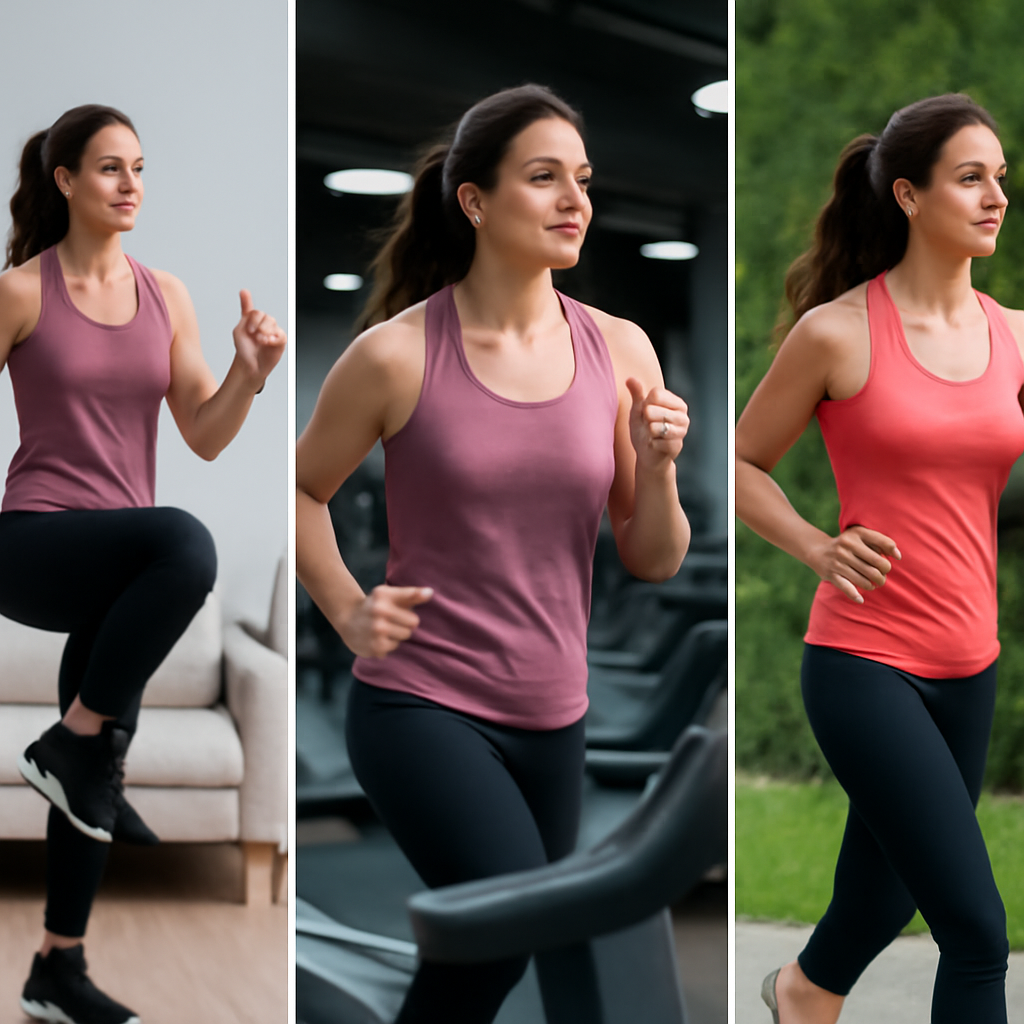
Prefer home training? Try a 25 to 35-minute routine that alternates gentle intervals with recovery. Warm up five minutes, then cycle 2 minutes at RPE (rating of perceived exertion) 6 and 3 minutes at RPE (rating of perceived exertion) 4 for four to six rounds, finishing with a five-minute cool-down and breath work. At the gym, the elliptical, bike, or treadmill can deliver similar sessions with fewer impact spikes. Outside, use landmarks—power walk one lamp post, stroll the next. The key is consistency over complexity, and movements you can execute with good posture and easeful breathing.
If you are ready for variety, sprinkle in a low-impact HIIT (high-intensity interval training) session. After a warm-up, perform 6 to 10 rounds of 30 seconds moderate-hard and 60 to 90 seconds easy on a bike, rower, or uphill walk. Keep form high, ribs soft, and jaw relaxed. On alternate days, enjoy LISS (low-intensity steady state) like an oceanfront walk or gentle swim—especially valuable in warm Cairns weather. Health Moves Cairns will tailor these templates to your goals, equipment, schedule, and recovery, so each session meets you where you are.
Sample Weekly Plans by Life Stage
| Life Stage | Day 1 | Day 2 | Day 3 | Day 4 | Day 5 | Day 6 | Day 7 |
|---|---|---|---|---|---|---|---|
| Pregnancy | Brisk Walk 20-30 min (RPE 4-5) | Swim 20-30 min (RPE 4), Breath Work | Rest/Mobility | Cycling 20-25 min (RPE 4-5) | Walk 20 min + Pelvic-Floor Practice | Low-Impact Dance 20-25 min | Rest |
| Postpartum (Return) | Stroller Walk 15-25 min (RPE 3-4) | Bike 15-20 min (RPE 4), Core Coordination | Rest/Mobility | Walk 20-25 min (RPE 4) | Swim 15-20 min (RPE 4) | Walk 15-20 min + Breath | Rest |
| Peri/Menopause | Zone 2 Ride 30-45 min | Strength (full-body) | Tempo Walk 20-30 min (RPE 6) | Rest or Yoga | Zone 2 Swim 30 min | Optional HIIT (high-intensity interval training) 10-15 min | Rest |
Note: Adjust minutes and intensity to symptoms, sleep, and guidance from your GP (general practitioner) and care team. If new to exercise or managing a condition, book a tailored assessment first.
Tracking Progress, Preventing Injury, and Building Confidence
Progress is not just pace. Track three signals: performance (time, distance, or RPE (rating of perceived exertion) at a given pace), recovery (sleep, mood, muscle soreness), and symptoms (pelvic heaviness, leaking, joint niggles). Many women benefit from a simple “green-amber-red” system. If you wake refreshed and symptom-free, go ahead with planned training; if you are moderately fatigued or symptomatic, reduce duration or intensity; if you feel unwell or experience unusual symptoms, rest and contact your GP (general practitioner). This self-check system encourages consistency without burnout.
To reduce injury risk, follow these basics. First, respect the 10 percent rule: increase weekly time or distance by no more than around 10 percent. Second, pair cardio with two strength sessions targeting hips, core, and upper back for resilience. Third, curate footwear and surfaces—soft trails and tracks are kinder than concrete. Finally, prioritize technique: think tall posture, relaxed shoulders, and nasal or soft-mouth exhale for rhythm. Health Moves Cairns provides ongoing mentorship, a child-friendly studio, and can coordinate with physiotherapists or other allied health and your GP (general practitioner) as needed, so your plan evolves as you do.
Common Barriers and How to Beat Them
- Time: Use “exercise snacks” of 5 to 10 minutes. Three snacks equal a full session.
- Motivation: Schedule sessions like appointments and train with a friend or group class.
- Heat/Humidity: Choose mornings or pools, hydrate, and lower intensity to keep RPE (rating of perceived exertion) appropriate.
- Pelvic-Floor Symptoms: Shift to low-impact options, reduce intensity spikes, and seek individualized guidance.
How Health Moves Cairns Personalizes Your Cardio Journey
Health Moves Exercise Physiology begins with a tailored assessment: your health history, movement screen, pelvic-floor considerations, and current fitness. From there, your practitioner creates an individualized plan combining evidence-based cardio, functional strength, and practical strategies to support sustainable routines. Where appropriate, the team can coordinate with your GP (general practitioner) and other healthcare professionals to ensure your program complements medical care and respects any conditions. You will receive clear weekly targets, RPE (rating of perceived exertion) guidelines, and simple tracking tools, plus adjustments based on sleep, cycle stage, and stress.
What sets Health Moves Cairns apart is not just expertise—it is environment. The space is welcoming, child-friendly, and designed for families, with classes that allow prams and flexible scheduling. Mentorship and check-ins help you navigate setbacks and celebrate wins, and the team’s calm, practical coaching turns complexity into confident action. For many, this is the missing piece between intention and habit. If you have been searching for cardio for women that is genuinely personalized and supportive across pre-natal, post-natal, and menopause, you will find a home here.
Quick Comparison: DIY vs. Guided Programs
| Feature | DIY Plan | Health Moves Cairns Plan |
|---|---|---|
| Assessment | Generic templates | Individual screening considering pelvic-floor and movement factors |
| Programming | One-size-fits-all | Evidence-based, life-stage specific progressions |
| Medical Collaboration | Rare | Coordination with your GP (general practitioner) and allied health as needed |
| Environment | Varies | Child-friendly, inclusive, supportive |
| Accountability | Self-managed | Ongoing mentorship and practical support to build routines |
Ready for a simple next step? Start with a low-effort baseline test: a 20-minute walk keeping RPE (rating of perceived exertion) at 4. Note distance, mood before and after, and sleep that night. Repeat weekly, and when your distance or ease improves twice in a row, nudge session time by 5 minutes or add a gentle interval. This kind of intelligent, humble progression sits at the heart of how Health Moves Cairns builds cardio for women programs that last.
Putting It All Together: Your First Four Weeks

Worried about where to start? Try this four-week outline and personalize it with the guidance of Health Moves Cairns. Week 1: Three sessions of 20 to 25 minutes LISS (low-intensity steady state) at RPE (rating of perceived exertion) 4 to 5, plus two 10-minute mobility blocks. Week 2: Add 5 minutes to two sessions; keep one short. Week 3: Introduce four rounds of 1-minute moderate-hard, 2-minute easy on a bike or hill walk. Week 4: Keep total time steady, but refine technique and breathing. If symptoms arise, scale intensity and check in with your GP (general practitioner).
As you build, remember that recovery drives results. Prioritize protein-rich meals, hydration, and seven to nine hours of sleep when possible. Gentle diaphragmatic breathing after sessions supports your nervous system and pelvic floor. Track three numbers weekly—total minutes, average RPE (rating of perceived exertion), and how you felt waking up—and you will see patterns quickly. Most importantly, choose modalities you enjoy. Enjoyment is not a luxury; it is adherence in disguise, and it is why the Health Moves Cairns approach stays sustainable long after the first burst of motivation fades.
Confidence, Community, and Sustainable Results
When cardio aligns with your physiology and your priorities, results compound—endurance rises, body composition improves, and daily activities feel lighter. Community accelerates that process. Training in a child-friendly environment, alongside practitioners who listen and adapt, makes consistency easier. With Health Moves Cairns, you are supported by evidence-based programming and real-world coaching that respects pregnancy, honors postpartum recovery, and helps you thrive through menopause. This is cardio for women designed for the long game, not a quick fix.
Conclusion
This guide promised safe, effective, and confidence-building cardio strategies tailored to your life stage—and now you have a roadmap you can trust.
Imagine the next 12 months: stronger walks, steadier energy, and workouts that fit your world, not the other way around, with expert support when you need it most.
What would change in your life if movement felt clear, compassionate, and consistent—starting with cardio for women that truly matches you?
Additional Resources
Explore these authoritative resources to dive deeper into cardio for women.
Elevate Your Cardio Results with Health Moves Cairns
Experience Specialized women’s health programs (pre-natal, post-natal, menopause) that deliver tailored, evidence-based cardio coaching, functional movement, and caring collaboration for lasting strength and wellness.


